Pioneering achievement: Wet lamella brake debuts in the Schaeffler Innovation Taxi
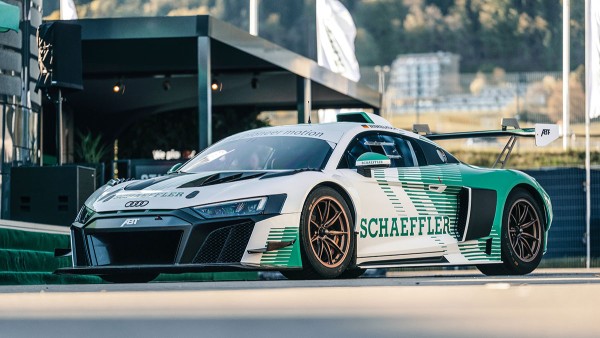
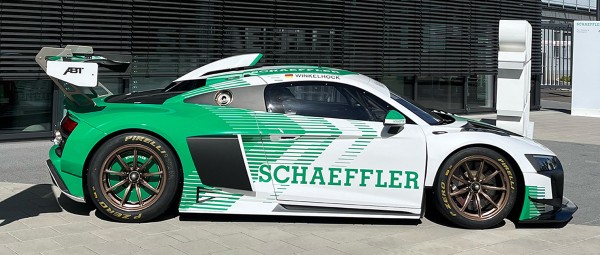
The Schaeffler Innovation Taxi is continuing in its role as a motorsport pioneer in the 2026 season. During the race weekend at the Nürburgring, Schaeffler used a wet lamella brake system in the race taxi for the first time – emission-free, noise-free, and maintenance-free. The insights gained regarding functionality and service life under the most extreme motorsport conditions are directly incorporated into the development of electric production axle drives with a highly integrated braking function. The goal: to reduce emissions and optimize handling.

Schaeffler wet lamella brake does not produce any particulate emissions
The use of the wet lamella brake in the Schaeffler Innovation Taxi is aimed, among other things, at one of its key advantages: The braking process produces absolutely no fine dust emissions. This is made possible by the system’s fully enclosed and oil-cooled design. As a result, no emissions are released into the environment. Harmful brake dust is thus a thing of the past. For example, during tire changes in the DTM, no brake dust is emitted into the environment.
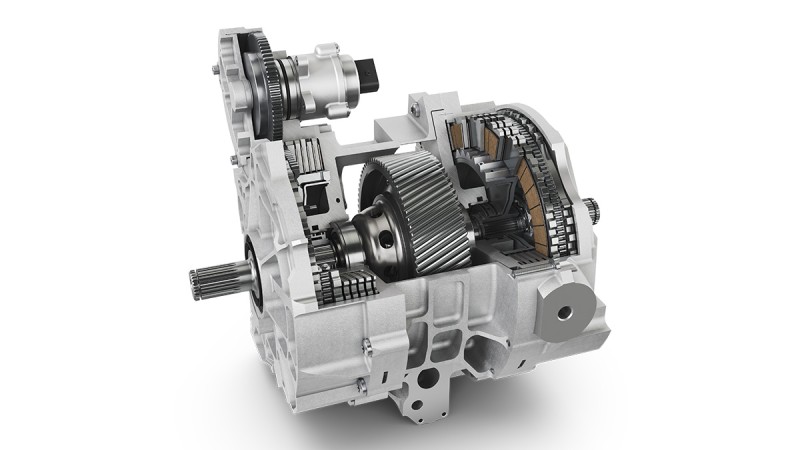
The design of the wet lamella brake is based on the proven operating principle of the wet lamella clutch. At the heart of the system is an oil-cooled stack of discs consisting of steel discs and friction-lined discs. During braking, the discs are pressed against one another, generating a frictional torque. This converts the vehicle’s kinetic energy into heat, thereby reducing its speed.
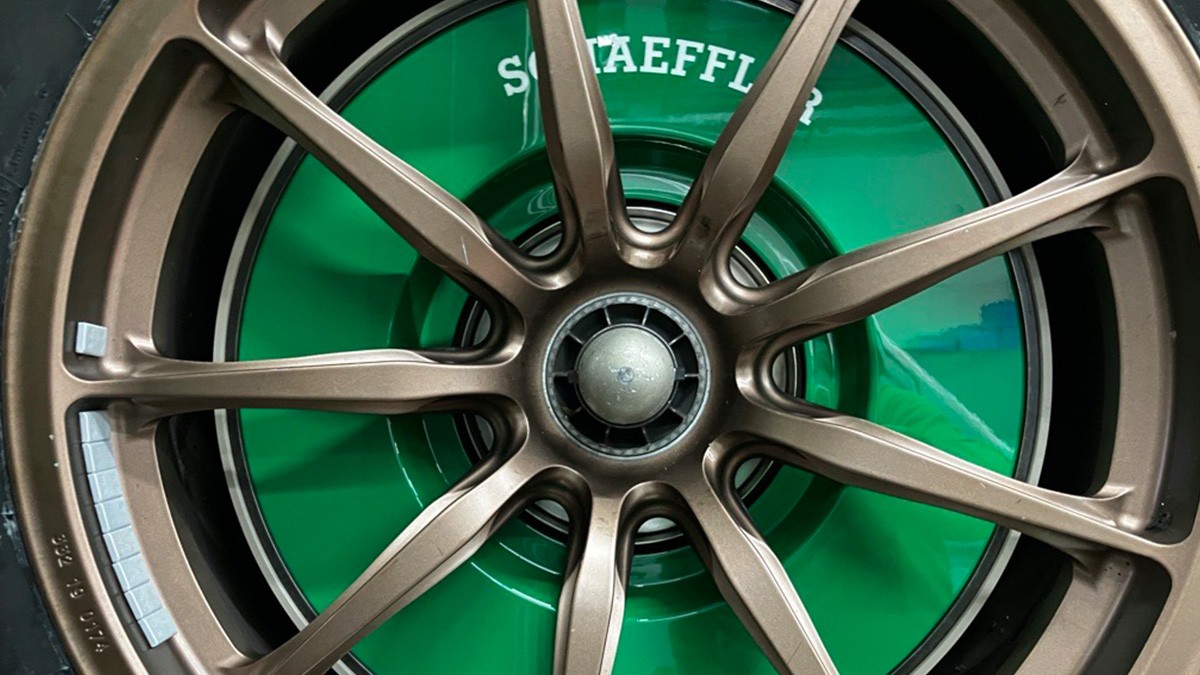
Compact, wear-free system with first-class acoustics
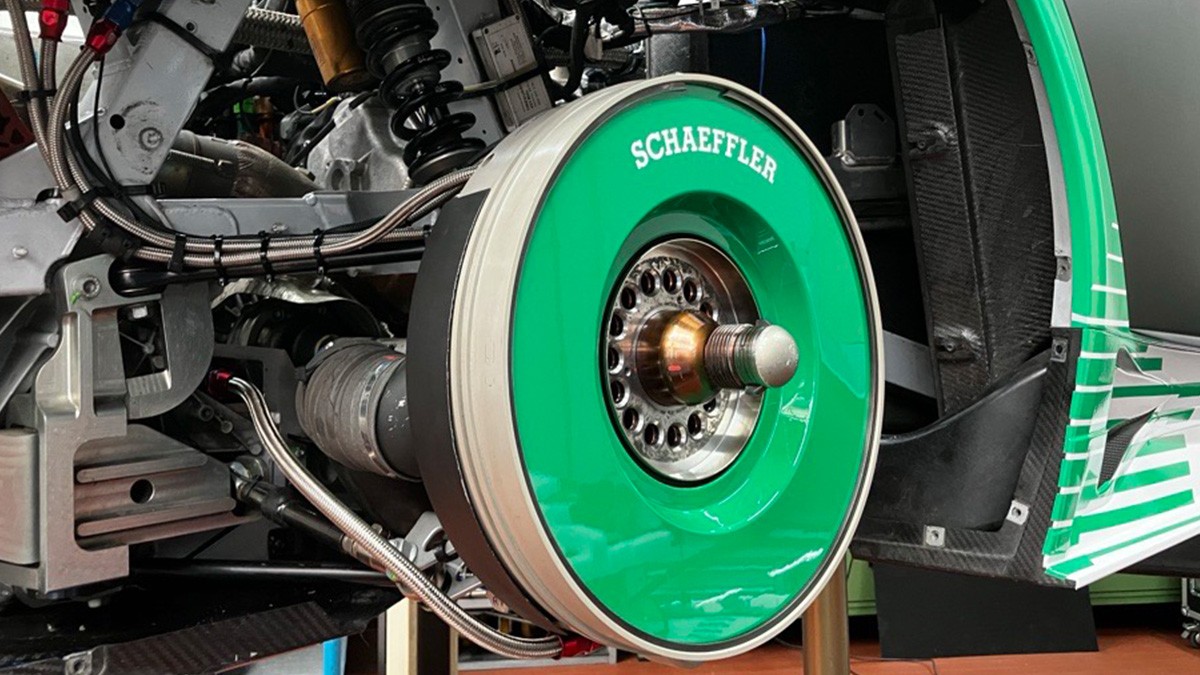
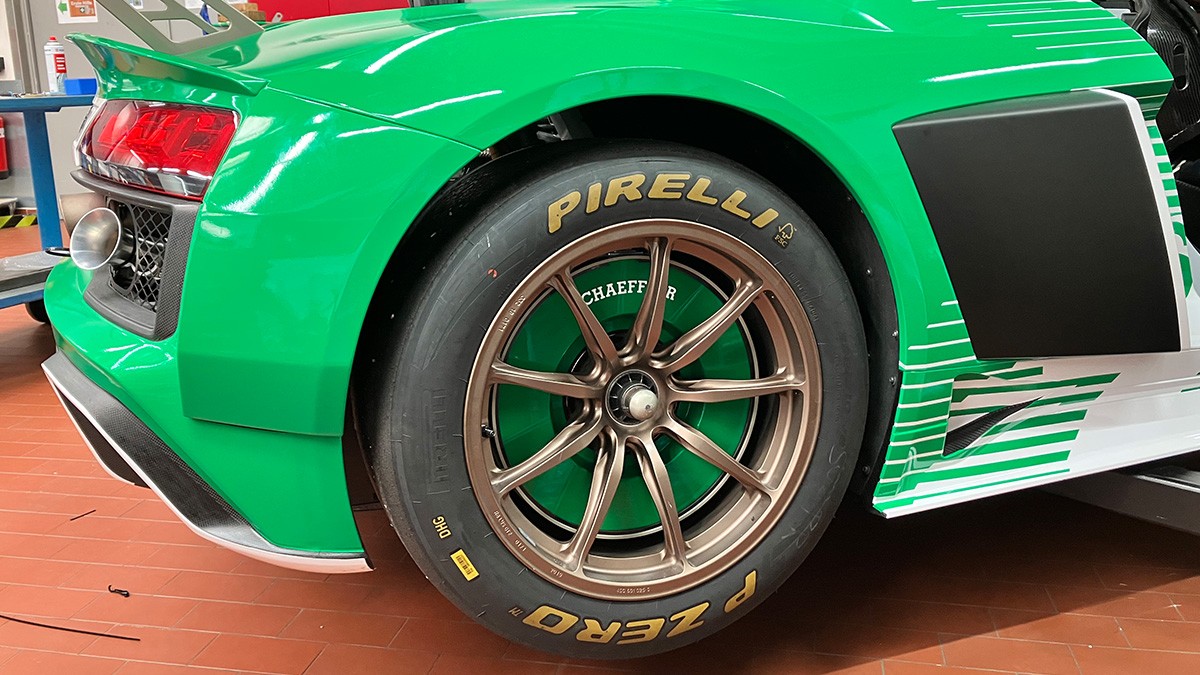
Due to design and space constraints, Schaeffler has integrated the unit – also known as a wet brake – into the rear axle wheels of the Innovation Taxi. As a result, external factors affecting the brake, such as moisture, no longer cause corrosion and ensure consistent friction coefficients.
In addition, thanks to its design, the Schaeffler wet lamella brake offers excellent acoustic performance. Unwanted braking noises – which occur especially at low speeds just before the vehicle comes to a stop – are a thing of the past.
Schaeffler solves fundamental problem with conventional wet lamella brakes
In the Innovation Taxi, the biggest challenge is dissipating the high heat output from the enclosed rear brake. To address this, a complex thermal management system was developed that includes hydraulic pressure and suction pumps as well as several heat exchangers. Under highly dynamic operating conditions, very high cooling capacities per brake are required.
The findings form the basis for designing an efficient lubrication strategy for future e-axles with integrated braking systems. The goal is to supply only the amount of oil necessary to control the temperature, coefficient of friction, and drag torques of a wet-running braking system. The results from the Innovation Taxi help Schaeffler evaluate the interplay between temperature, braking performance, operational stability, and wear, and incorporate these findings specifically into series production development.
Test offers glimpse into potential use in electric vehicles
Andreas Wassmer, Director Concept Car Development, explains the benefits of the Schaeffler wet lamella brake to brand ambassador Carrie Schreiner.
The first endurance test at the Nürburgring race track went well. The preliminary study of the wet lamella brake in the Innovation Taxi met all expectations. The test drives under race conditions provided Schaeffler with valuable insights for the development of electric axles in which the wet lamella brake can be installed as a highly integrated unit. In electric vehicles, the majority of braking operations are performed by the regenerative electric motor—but for the remaining braking operations, such as critical braking points, a mechanical braking system will continue to be necessary in the future.
As part of the DTM race at the Nürburgring, Schaeffler also provided a glimpse of how the integration of the wet lamella brake into a current production vehicle might look. The new braking system is already integrated into this concept car and is even fully functional. This means that Schaeffler’s innovation has not only passed its first tests on the racetrack but is also showing its potential in the area of series production.
Schaeffler’s wet brake meets all the fundamental requirements of a modern braking system and offers numerous additional advantages. These include emission-free operation, a reduction in unsprung mass at the wheel and the resulting increase in ride comfort, as well as greater flexibility in vehicle design. Furthermore, the wet brake is ideally suited for future vehicle architectures in which brake-by-wire systems play a key role. Particularly in autonomous vehicle concepts, it serves as a technological trailblazer for innovative and highly integrated braking system solutions.