Working together for a sustainable future: Schaeffler Stakeholder Dialogue 2025
Around 150 experts from business, academia and NGOs gathered at the 2025 Schaeffler Stakeholder Dialogue meeting to discuss sustainability-related topics such as the circular economy, human rights, and supply chain transparency. In wide-ranging workshops and in-depth discussions, participants addressed issues such as the practical implementation of sustainable strategies and ways to strengthen collaboration.
For Schaeffler's sustainability management, it is of central importance to know and take into account the interests and issues of customers, employees, investors, suppliers, politics, and society. The regular stakeholder dialogue, which takes place once a year in Herzogenaurach, supports this. The exchange with internal and external stakeholders helps the Schaeffler Group to identify relevant expectations from its environment at an early stage, to better assess risks and opportunities, and to further develop sustainability measures in a targeted manner.
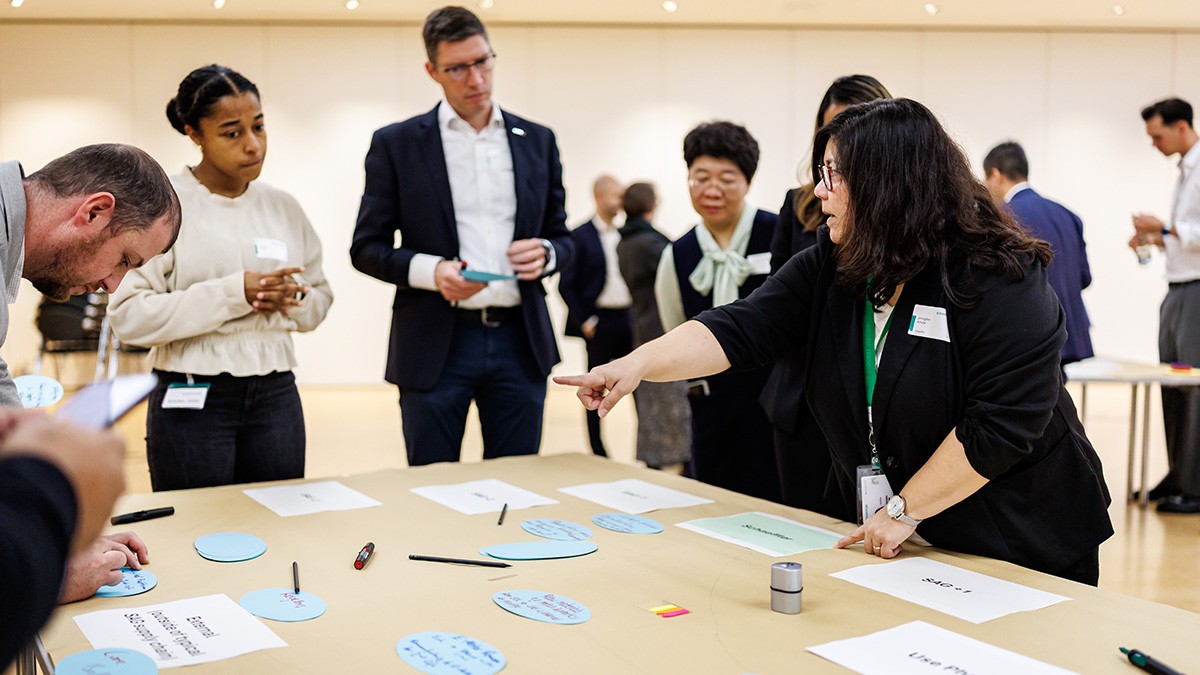
Stakeholder engagement: Insights and dialogue at many levels
“Sustainability – a long-term commitment” was the motto of the 2025 Schaeffler Stakeholder Dialogue held on October 22. Around 150 participants from business, academia, NGOs and consultancies came together in Herzogenaurach to engage in discussions, network more closely, get to know other perspectives, and collaborate on finding solutions. This round of the Stakeholder Dialogue focused on the topics of circular economy, human rights, supply chain transparency, and sustainability strategy.
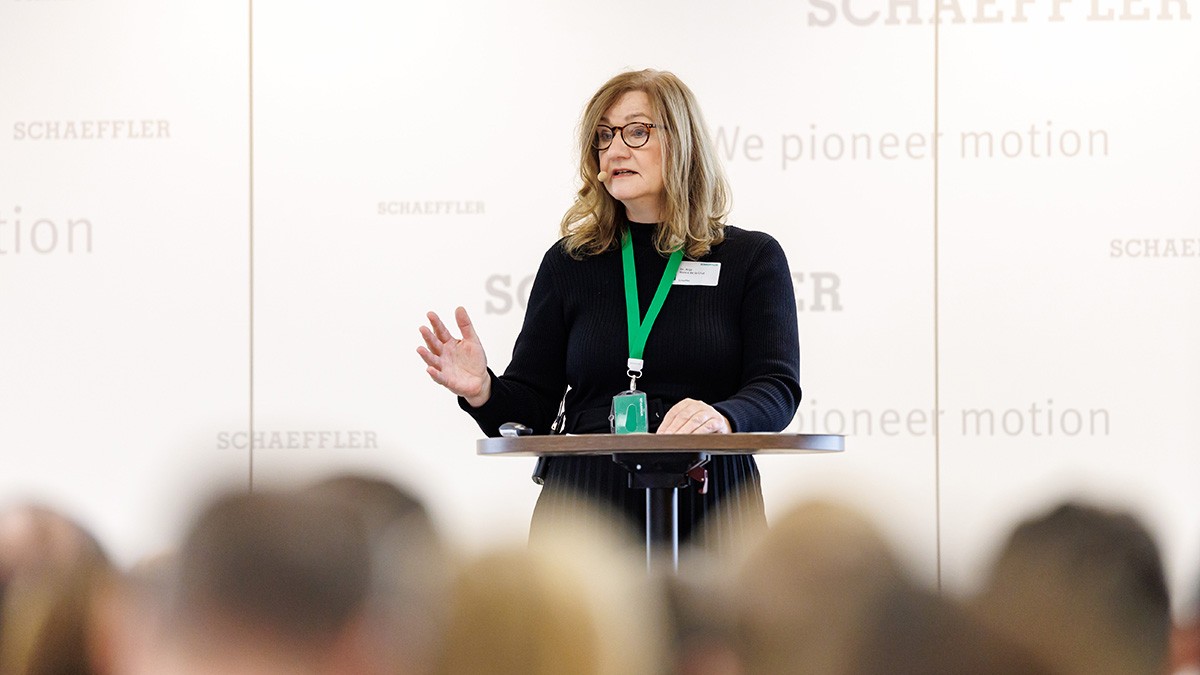
Sustainability continues to be a key corporate value and driver of transformation
“In times of increasing uncertainty, we need to understand sustainability as a compass that will help us navigate into the future responsibly and resiliently,” stressed Dr. Anja Rivera de la Cruz, Head of Strategic Sustainability, in her keynote address: “Navigating Corporate Sustainability in Troubled Waters”.
Professor Karin Kreutzer from the EBS Business School also addressed the importance of long-term thinking in this context, explaining that the economic consequences of climate change for coming generations would be many times greater than the costs of mitigating them.
This topic was also taken up later in the event by Emira Biser, Supply Chain Sustainability Leader at energy equipment manufacturer GE Vernova, in her keynote “Supply Chain Sustainability in Practice”: “At GE Vernova Wind, we merge lean with decarbonisation to advance end-to-end supply-chain sustainability – working closely with our suppliers to remove carbon and cost and deliver measurable value for all stakeholders.”
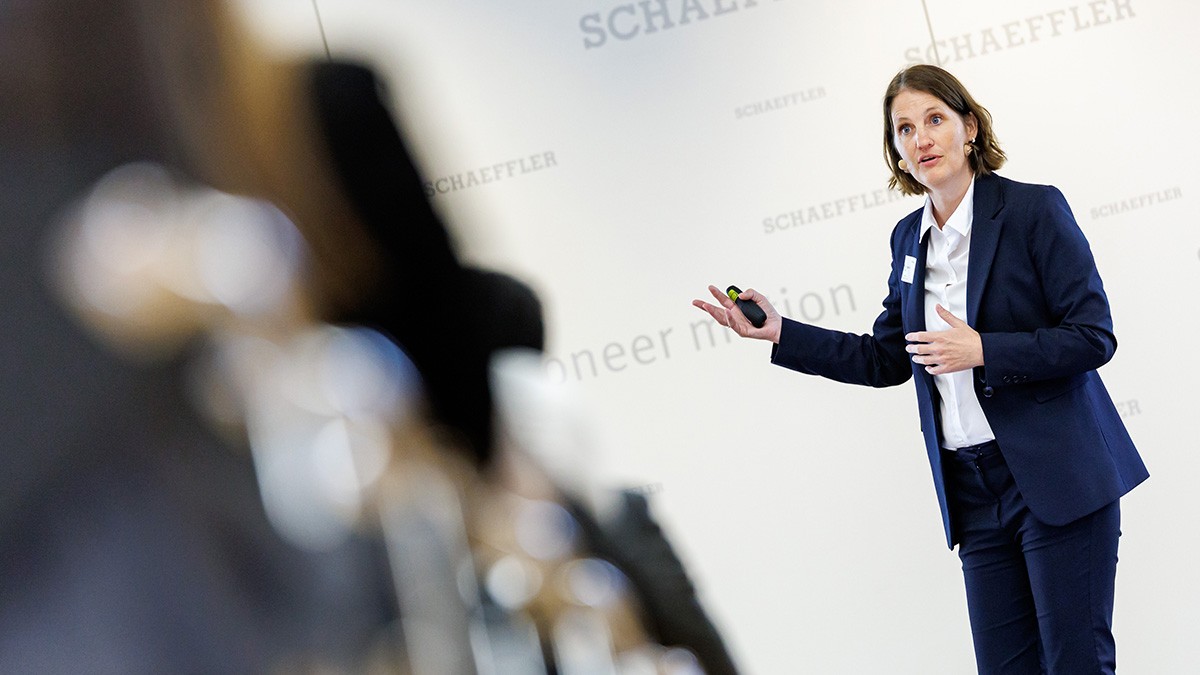
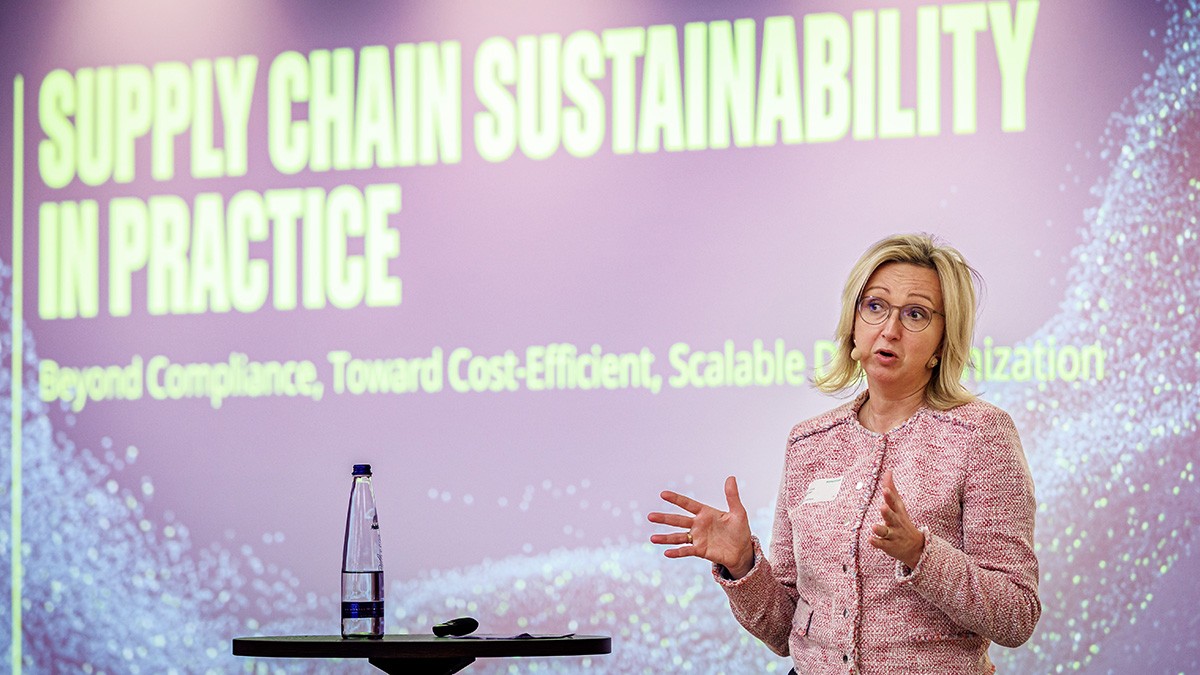
Overall, the experts agreed that the shift to genuinely sustainable business models could only be achieved through the interaction of transparency, technology innovation, and systemic collaboration.
Panel discussion: Sustainability networks as success factor in complex organizations
The event closed with a panel discussion featuring Schaeffler experts and representatives of Toyota and the Boston Consulting Group on the topic “How to build a strong sustainability network in complex organizations”. In her closing address, Anja Rivera de la Cruz also returned to this question: “Only through close networking and mutual exchanges can we overcome the diverse challenges on our journey to sustainability and effect genuine change together. The second Schaeffler Stakeholder Dialogue was a wonderful opportunity to provide impetus for this project and further consolidate our collaboration.”
August 2026